


How to Keep Your Lights On During a Storm with a Propane Generator
- McCormick Banks
- Jun 8
- 4 min read
When severe weather strikes, one of the biggest concerns homeowners have is: How do I keep your lights on during a storm?
Power outages caused by high winds, lightning, flooding, and falling trees can leave homes without electricity for hours or even days. Losing power doesn't just mean sitting in the dark—it can also put food, medical equipment, communication devices, and home comfort systems at risk.
One of the most reliable ways to keep your lights on during a storm is by using a propane generator. Propane generators provide dependable backup power, long fuel storage life, and cleaner operation than many traditional fuel options.
In this guide, we'll explain exactly how to keep your lights on during a storm, why propane generators are an excellent backup power solution, and how to protect your propane tank from the elements.

Why a Propane Generator Helps Keep Your Lights On During a Storm
If you're wondering how to keep your lights on during a storm, the answer starts with having a dependable backup power source.
Propane generators are a popular choice because they offer several advantages over gasoline-powered models.
Reliable Fuel Supply
Unlike gasoline, propane does not degrade over time. It can be stored for years without losing effectiveness, making it ideal for emergency preparedness.
When a storm knocks out power unexpectedly, you'll have fuel ready when you need it most.
Cleaner and More Efficient Operation
Propane burns cleaner than gasoline and diesel fuel, producing fewer emissions and reducing engine deposits.
This means:
Less maintenance
Longer engine life
More dependable operation during emergencies
Fast Power Restoration
Many propane generators can restore power within seconds of an outage.
When paired with a transfer switch, your generator can power essential household systems including:
Interior lighting
Refrigerators and freezers
Internet equipment
Medical devices
Heating and cooling systems
Safer Fuel Storage
Propane is stored in sealed containers, reducing the risk of spills and fuel contamination.
Outdoor propane storage also helps eliminate many of the hazards associated with storing gasoline.
How to Keep Your Lights On During a Storm: Preparation Checklist
The key to maintaining power during severe weather is preparation.
Check Your Generator Monthly
Run your generator at least once per month to verify proper operation.
During each inspection:
Check oil levels
Inspect connections
Test battery charge
Listen for unusual noises
Routine testing helps ensure your generator performs when you need it most.
Keep Your Propane Tank Full
A generator is only as reliable as its fuel supply.
Before storm season:
Fill your propane tank
Inspect hoses and regulators
Check for rust or corrosion
Verify that connections are secure
Having adequate fuel on hand is one of the most important steps in learning how to keep your lights on during a storm.
Install a Transfer Switch
A professionally installed transfer switch allows you to safely connect your generator to your home's electrical system.
Depending on your setup, you can power:
Essential circuits
Entire rooms
Whole-home systems
Automatic transfer switches can even start your generator automatically when utility power fails.
Store Backup Propane
Extended outages can last several days.
Keeping an additional propane cylinder available can provide valuable extra runtime when utility restoration is delayed.
Always store propane tanks according to local codes and manufacturer recommendations.
Generator Safety During Storms
Backup power is only effective when used safely.
Follow these important safety guidelines:
Never operate a generator indoors
Keep generators away from doors, windows, and vents
Maintain at least 10 feet of clearance from structures
Protect equipment from standing water and flooding
Turn off the generator before performing maintenance
Follow all manufacturer operating instructions
Safe operation helps protect your family while ensuring uninterrupted power during severe weather.
Protect Your Propane Tank During Storm Season
If you're investing in backup power, protecting your propane tank is equally important.
Storms can expose propane tanks to:
Heavy rain
Hail
Wind-blown debris
UV damage
Snow and ice
Over time, these elements can contribute to corrosion and wear.
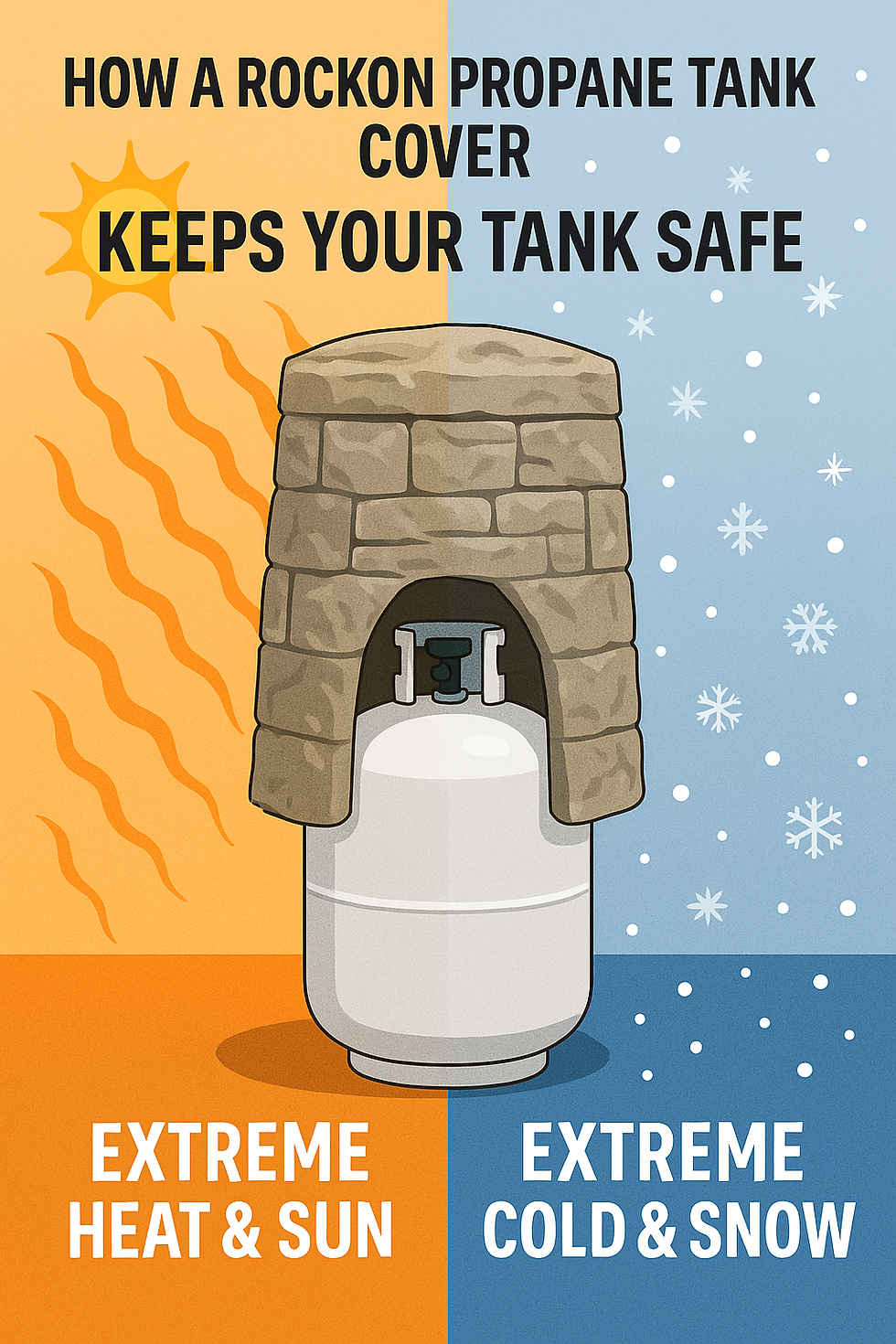
Benefits of a RockOn Propane Tank Cover
A RockOn Propane Tank Cover helps protect your propane cylinder while improving your outdoor appearance.
Benefits include:
Protection against weather-related damage
Reduced exposure to UV rays
Decorative rock-style appearance
Durable outdoor construction
Proper ventilation for safe operation
Compatibility with standard generator propane tanks
Whether you use a portable or standby generator, protecting your fuel source helps ensure reliable backup power when storms arrive.
Final Thoughts
If you've ever asked yourself "how to keep my lights on during a storm," a propane generator is one of the most dependable solutions available.
With proper maintenance, adequate fuel storage, routine testing, and safe operation, a propane generator can keep your home's essential systems running through unexpected outages.
Pairing your generator with a protective propane tank cover can further improve durability, weather resistance, and appearance.
Be Ready Before the Next Storm
Don't wait until the power goes out. Prepare your backup power system today and protect your propane tank with a RockOn Propane Tank Cover—designed to help homeowners stay powered, protected, and prepared throughout storm season.


Comments